

Multifocal contact lenses: how do they work?

Contact lenses are fascinating little things. These tiny jelly-like things that are tailored to our exact eyesight requirements, sit directly against our eyes and help us see clearly can be life-changing for both adults and kids.
Contact lenses can be made from a range of different materials depending on the prescription, like silicone hydrogels, fluoropolymers and silicone acrylate – just to name a few.
The material chosen depends on whether you need hard or soft contact lenses, but regardless of your requirements they’re a fantastic choice for a number of reasons.
Convenient and versatile, contact lenses can give wearers a new lease on life. And luckily for those who require multifocal glasses, you can have contact lenses to fit your vision too!
“Multifocal contact lenses let you see clearly at all distances — near, intermediate and far — without constantly switching glasses.”

What are multifocal contact lenses for?
Multifocal contacts are designed for the same purpose as multifocal glasses: to correct presbyopia, a common eyesight condition that occurs with age.
Presbyopia causes difficulties with clear viewing when you’re looking at things up close, as opposed to myopia which causes issues when looking at things from a distance.
People with either presbyopia or myopia can benefit from multifocal contact lenses. It can also treat astigmatism, a common condition that occurs when the cornea is not perfectly round and curves like an oval instead, causing blurred or distorted vision.
Using multifocal contact lenses can drastically improve your vision. The lenses are designed to have different vision supports in different areas, similar to multifocal glasses. This allows you to have clear vision at all times, regardless of whether you’re looking close up or far away.
They’re much easier than repeatedly swapping out contact lenses every time you want to look at something far away – and much safer for your eyes, too!
“If you’re over 40 and struggling with reading or eye strain, multifocal lenses may be the perfect solution.”

Types of multifocal contact lenses
Typically, there are three types of multifocal contact lenses available. These are:
- Concentric bifocal contact lenses: These lenses have a centre-near design, with the distance prescription in the outer portion of the lens and the near correction in the centre.
- Aspheric multifocal contact lenses: These lenses blend many prescriptions over the surface of the lens and are designed to mimic the natural changes in the eye’s power that occur with age.
- Translating multifocal contact lenses: These lenses move slightly up and down to allow the wearer to see at different distances. The upper part of the lens usually has a prescription for distance vision, while the lower part is for near vision.

Do you need multifocals?
If you feel like you’re forever needing to take your glasses on or off, you have concerns about your eye health or your contact lens prescription doesn’t fit like it used to, you may need multifocal lenses.
Other signs might include:
- Difficulty seeing clearly up close, such as when reading or doing close-up work
- Difficulty seeing clearly at a distance, such as when driving or watching TV
- Difficulty adjusting to different lighting conditions
- Eye fatigue or strain, especially after extended periods of reading or using digital devices
- Squinting, headaches, or other discomfort when trying to focus on objects at different distances.
Regardless of whether the answer is multifocals or not, if you’re experiencing any of the above symptoms it’s important to get yourself in for an assessment with a trusted optometrist.
We’ll be able to help you understand what’s happening with your eyes and, most importantly, how to improve it.
Contact us to schedule an appointment, or just come by and visit us in our local Manly clinic – open 6 days a week!
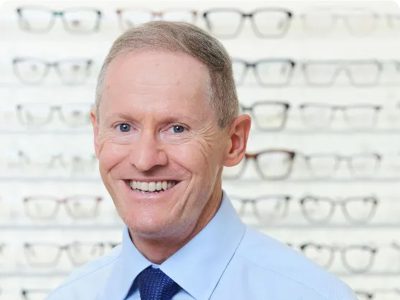
Meet the Author
Ian Donald
Optometrist
Ian Donald had a vision.
He was going to become a dentist. It seemed like a good plan, until his careers adviser gave him a brochure on optometry. It opened up a whole new world. The eye intrigued him. It fascinated him. Optometry captivated him. And so his whole focus changed.
Ian went on to do work experience in the very office he owns today. While studying Optometry at the prestigious UNSW, he spent hours working in that same office, doing all the things no one else wanted to do. Filing. Filing. Filing.
Learning, learning, learning. It’s part of who he is.
Even today he is constantly training and retraining, studying and staying up to date with the latest technology in eye health.
So what else energises Ian?
‘Riding my bike, being part of the community, and helping people see. It gives me the best feeling possible. We take it for granted, because we do it all day, every day. It’s such a gift to be able to give people peace of mind.’ Read More
FAQs
What are multifocal contact lenses and who can benefit from them?
Multifocal contact lenses are designed to correct presbyopia (age-related near vision problems) and are ideal for people who want clear vision at multiple distances without switching between different glasses.
How do multifocal contact lenses differ from single-vision lenses?
Unlike single-vision lenses that only correct one distance, multifocal lenses have multiple prescription zones, allowing you to see clearly at near, intermediate, and far ranges.
What types of multifocal contact lenses are available?
Ian Donald Optometry explains that there are different types of multifocal lenses, including concentric bifocal, aspheric multifocal, and translating multifocal designs
How do I know if I need multifocal contact lenses?
If you experience blurred near vision, eye strain, or difficulty focusing at different distances, you may benefit from multifocal contacts, especially if you’re over 40.
How can I get fitted for multifocal contact lenses at Ian Donald Optometry?
You can arrange a professional contact lens fitting appointment where the optometrist will assess your eyes and recommend the best multifocal option for your lifestyle and vision needs.








 View Brands
Have questions?
Chat with our team today

Shop 2, 37-39 The Corso,
Manly NSW 2095

Monday to Friday - 8.30am to 5.30pm
Saturday - 8.30am to 4.00pm
Ian Donald Optometrist is a private billing practice. Please contact reception for our consultation fee schedule. Medicare and private health insurance rebates apply.
 BOOK an EYE TEST
© Copyright Ian Donald Optometrist 2025. All Rights Reserved. Website by Brilliant Digital.